Local
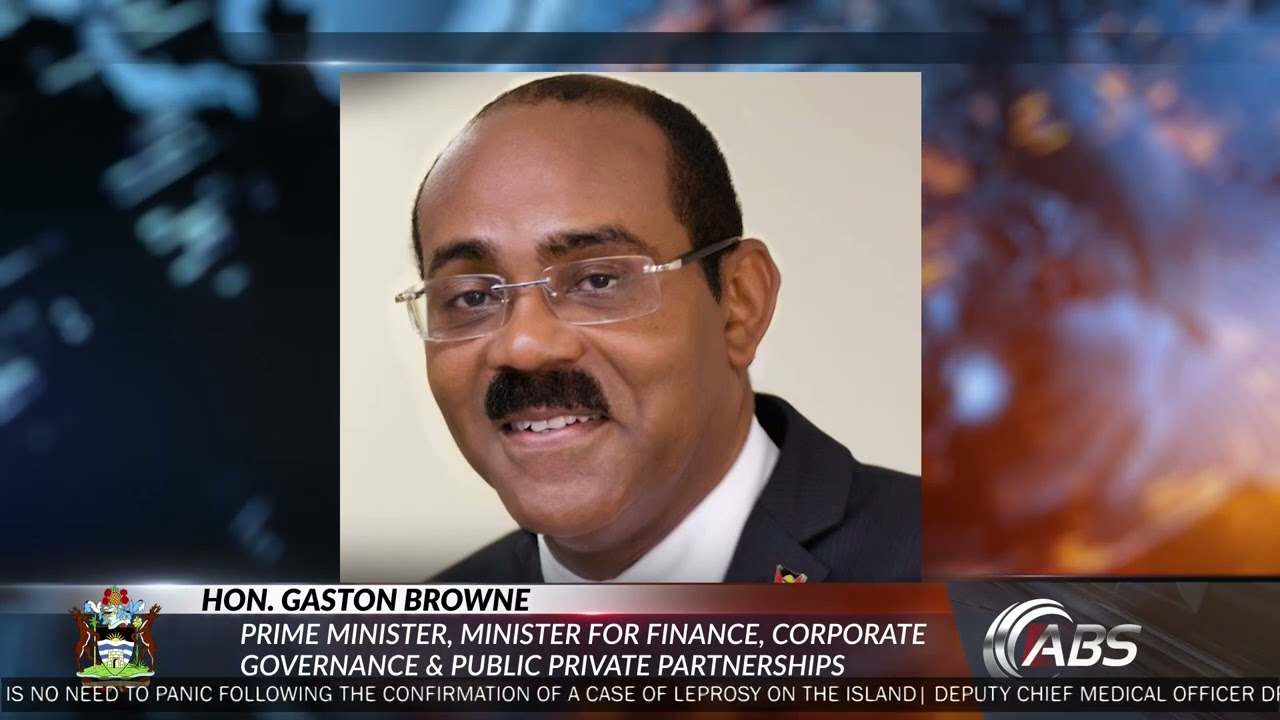
Prime Minister Gaston Browne defends Government’s Strategic Jolly Beach Investment to Strengthen Social Security and Drive Long-Term Economic Growth
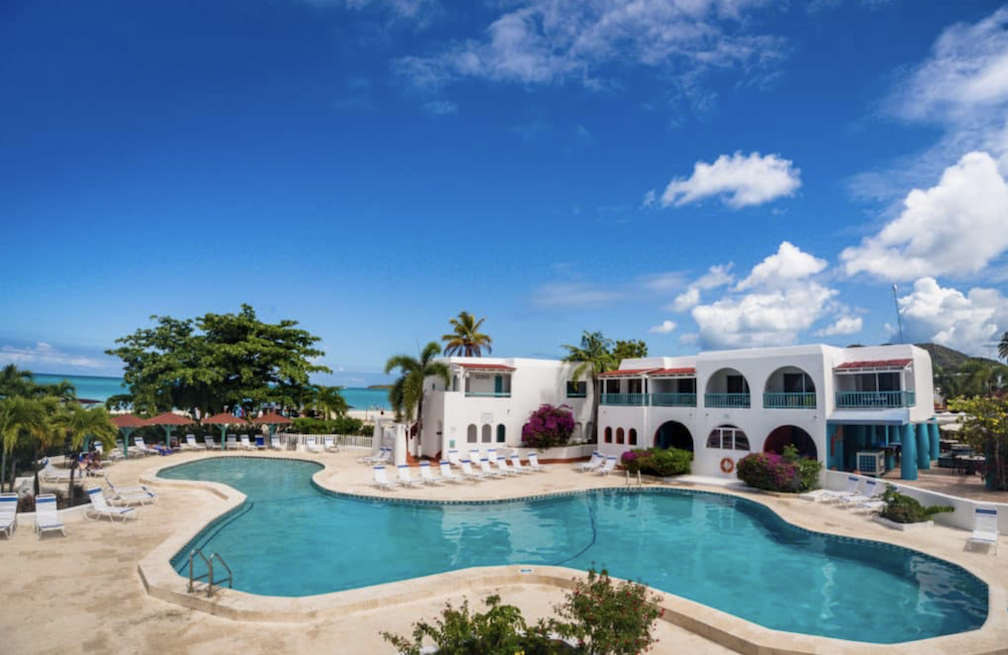
Prime Minister the Hon. Gaston Browne has defended his government’s bold and visionary move to safeguard the long-term sustainability of Antigua and Barbuda’s National Social Security Scheme, through the transfer and redevelopment of the Jolly Beach Hotel as part of a strategic investment initiative. This effort, spearheaded by Prime Minister the Honourable Gaston Browne, will not only enhance Social Security’s revenue base, but also restore a key national asset, create jobs, and boost tourism.
The resort—located on 27 acres of prime beachfront land and valued at EC$67 million—will be utilized to settle part of a $330 million delinquent government bond owed to the Social Security Board. The bond, issued in 2010 under a previous administration, has remained non-performing for over a decade, compromising the Scheme’s financial health and its ability to meet pension obligations.
“This is more than a real estate transaction,” said Prime Minister Browne. “It is a transformational move to repair past fiscal failures and to position our Social Security Scheme on a path of solvency and prosperity.”
A Revenue-Generating Investment Plan
In a paper written by Prime Minister Gaston Browne defending his government’s decision, it was made clear that the government’s multi-pronged investment strategy is designed to unlock revenue from both existing and new hospitality infrastructure:
- 315 rooms will be sold under the Citizenship by Investment Programme (CIP) at EC$900,000 each, netting an estimated EC$200 million after administrative costs.
- An additional 200 rooms will be constructed on 10 acres of the property, financed through an EC$75 million public investment, and sold at EC$1.3 million per unit, also projected to generate EC$200 million in net revenue.
The total expected revenue over a ten-year horizon is EC$400 million, with an average annual yield of EC$40 million. This significantly outpaces passive investment options, such as bonds or term deposits, which typically yield around 2%—or just EC$2.8 million annually on a comparable EC$142 million investment.
Even under more conservative projections, with revenues discounted by 50%, the investment would still produce an annual return of EC$20 million, or EC$17.2 million more than the passive strategy, wrote Prime Minister Browne.
“This is the kind of smart, forward-thinking investment that ensures Social Security isn’t just surviving—but thriving,” the Prime Minister stated.
Operational Sustainability and Risk Protection
The plan provides a layered structure of financial stability:
- Hotel operations, currently generating EC$4 million in annual profits, are expected to grow to EC$10 million post-development.
- Maintenance and upkeep will be funded by monthly homeowners’ fees of EC$1,000 per unit, projected to bring in EC$6 million annually.
- Should the Social Security Board face any operational or financial challenges, the Government has committed to covering any shortfall, making the investment secure and de-risked.
Building a Balanced, Diversified Pension Fund
Prime Minister Browne wrote that the investment is part of a broader strategy to diversify the Social Security Fund’s portfolio—a standard practice in modern pension management that balances liquidity, risk, and long-term growth.
Historically, the Antigua and Barbuda Social Security Scheme has relied almost exclusively on fixed deposits, earning low returns and ultimately contributing to its declared insolvency in 2010. In contrast, many global pension funds invest in real estate, infrastructure, and other long-term illiquid assets to hedge against inflation and ensure steady returns.
“A sustainable pension system requires more than just savings accounts,” said Prime Minister Browne. “It requires strategic asset allocation and proactive investment to meet future obligations.”
Correcting the Failures of the Past
The Prime Minister did not shy away from highlighting the mismanagement and neglect that led to the Scheme’s financial deterioration. Between the 1990s and 2014, successive governments failed to:
- Repay loans from the Social Security Fund;
- Make parametric reforms such as adjusting retirement age or contributions;
- Invest Social Security funds for growth.
“Instead of acting on the 2010 actuarial findings of insolvency, then-Finance Minister Harold Lovell chose inaction,” Browne noted. “That failure forced pensioners to line up in the early morning hours, only to leave without their payments.”
By contrast, the Gaston Browne administration has since:
- Implemented necessary parametric reforms in 2016;
- Injected over EC$200 million into the Scheme over the past decade;
- Committed a further EC$90 million in upcoming support, bringing total contributions to EC$300 million—a sharp contrast to the EC$65 million paid during the UPP’s entire 10-year term.
Governance, Transparency, and Risk Management
To safeguard this major investment, the Government and the Social Security Board will implement robust governance protocols, including:
- Enhanced Investment Committee oversight with qualified financial professionals;
- Parliamentary reporting every six months;
- Annual professional audits and public disclosure;
- Caps on investment exposure based on risk profile;
- Liquidity buffers to meet near-term obligations;
- Stress testing and independent valuation of assets.
New regulations are also being developed to ensure compliance with best practices in pension fund management and public finance, Prime Minister Browne pointed out.
Broader Economic Impact
Beyond strengthening pensions, the Jolly Beach investment will drive wide-ranging national benefits:
- Hundreds of jobs in construction and hospitality;
- Significant foreign exchange inflows;
- Increased tax revenues from property, VAT, and income;
- Greater entrepreneurial opportunities through support services;
- Enhanced national pride and ownership of a key hospitality asset;
- Expanded airlift from international carriers to meet demand.
“This is more than a hotel project—it’s an engine of economic transformation,” Browne added.
A Vision for the Future
Prime Minister Browne described the investment as a critical pillar in the Government’s broader vision to build a resilient, inclusive, and economically independent Antigua and Barbuda.
“We are charting a new course—where public assets work for the public good, and where we move beyond dependency and despair into ownership, growth, and prosperity,” he said.
While the initiative may face opposition from what the Prime Minister described as “risk-averse pessimists,” he reaffirmed that the Antigua and Barbuda Labour Party (ABLP) administration remains committed to delivering results, driven by competence, confidence, and a track record of success.
“We are securing the future for our pensioners, building national wealth, and creating opportunities for generations to come. The ABLP Government will deliver,” he concluded. (Ends)

RIVETING ACTION AS ABFA KNOCKOUT CUP BEGINS

PM MAKES REFERENCE TO BULGANI IN CALL FOR CHEMICAL CASTRATION

PEACE BEACH TAKES SHAPE WITH INSTALLATION OF ARTIFICIAL REEF

Antigua and Barbuda Delegation Participates in Third CARICOM Regional Conference on Reparations

Crime Thrives on Weak Justice, Illegal Guns and Dirty Money

POLICE PROBE THE CAUSE OF AFTERNOON BLAZE IN ST JOHN’S

FALCONS CRUSH WARRIORS TO STORM INTO CPL FINAL

US Drops Venezuela From Drug List

‘FIRE AND PASSION’ – MOEEN ALI CREDITS FALCONS’ SPIRIT FOR IMPRESSIVE SHOWING

26-MEMBER BENNA BOYS SQUAD NAMED FOR NATIONS LEAGUE
ABS EVENING NEWS (LOCAL SEGMENT & WEATHER REPORT) 19.1.2024
ABS EVENING NEWS (LOCAL SEGMENT & WEATHER REPORT) 18.1.2024
ABS EVENING NEWS (LOCAL SEGMENT & WEATHER REPORT) 16.1.2024
ABS EVENING NEWS (LOCAL SEGMENT & WEATHER REPORT) 14.1.2024