Op-Ed
The Commonwealth can be the basis for Mark Carney’salliance of middle powers
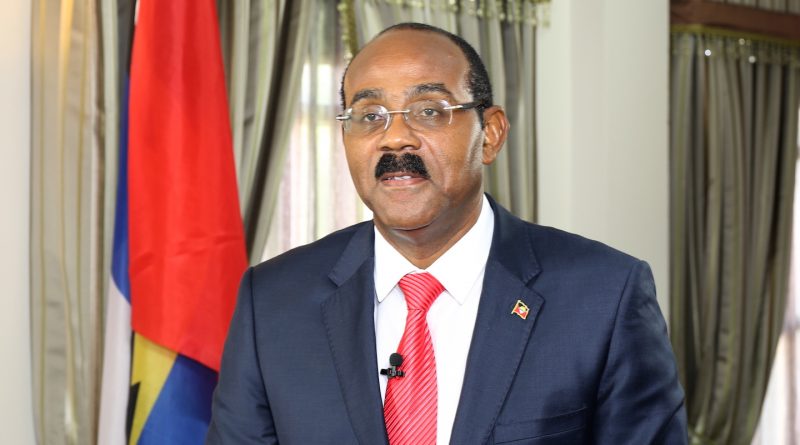
Britain is uniquely well placed to harness the potential of its former colonies,
this time on an equal basis
With the unfolding events in the Middle East, Canadian prime minister Mark Carney’s recent speech on middle powers takes on a new relevance: how should countries that are not one of the world’s superpowers best navigate, prosper, and keep themselves – to paraphrase Carney – “at the table, so they are not on the menu”?
Some answers are emerging quicker than expected. They are driven by the realisation that it is dangerously naïve to think there will be a return to the “factory settings” of global structures and mindsets under future US administrations. The geopolitical order is changing, and that change is here to stay.
Critically, the most clear-headed vision of middle power collaboration does not include proposals to retreat behind regional trade blocs.
Quite the opposite: in recent days Mr Carney visited far-Jung Australia to discuss closer cooperation between these two “strategic cousins”, both Commonwealth realms which maintain King Charles III as head of state within the 56-member Commonwealth of Nations (which today mostly contains republics).
The solutions being proSered are noticeably cross-party: Canada’s opposition leader was in London last week outlining his support for CANZUK, a popular proposal for a closer, freer trade, and freedom of movement alliance between the Commonwealth countries Canada,
Australia, New Zealand, and the United Kingdom.
Today, as we celebrate Commonwealth Day, it is an opportune moment to consider where this leaves countries such as my own Antigua and Barbuda – at the same time both a small island state in the Caribbean and a Commonwealth Realm. Later this year, we will assume the two-year rotating Chair-in-OZce of the organisation at the Commonwealth Heads of Government Meeting (CHOGM), which we will host in our capital, St. John’s.
Small island states have all bene^ted immeasurably from the existence of the rules-based international system because, selfevidently, we would not have the capacity to wield power freely in a dog-eat-dog world. Antigua and Barbuda’s high-income levels (we
enjoy the highest UN Human Development Index status in the Caribbean) would qualify us for middle power status – were it not for our very small population.
How alliances of far larger middle powers rise to strengthen ties between each other and, arguably, replicate the worldwide framework in which most of us have lived our lives is therefore of existential importance to our future.
For that reason, it is time to turn again to the potential of those international organisations which, because they endure, have too often been overlooked. What makes our Commonwealth
relationships so valuable is that they are not caused by geography but made through choice and underpinned by the values we share. They are what has made the Commonwealth so perdurable yet overlooked and under considered at the same time.
For decades there have been discussions about the future of the organisation. How might it become a more effective platform for intra-member trade, and how it might move from an effective but loose club of friends to something more potent? Despite interest, all its leading members have maintained their focus elsewhere – Britain to the European Continent, Canada to its southern neighbour, Australia to the Pacific, and India to its regional sphere of inJuence.
The Commonwealth was a benefit, but never perhaps enough to make
for an opportunity.
Now the world has changed. That alliance of “strategic cousins” which prime ministers Carney and Albanese commended in Canberra has many more potential members. There is a no more obvious place where such cousins can be found than amongst the current members of today’s Commonwealth.
Already we benefit, by nature of our common histories and political systems, from a “Commonwealth Advantage” where the cost of trade between us is, on average, 21 per cent lower than between nonmembers. But we can do so much more.
This is now a moment to bring our nations closer together, to bring down non-tariff barriers such as overlapping standards and customs delays and strive to create common standards to smooth trade between Commonwealth cousins. All of this is within our power to change.
We are also similarly united on the other great issues of our times. The need to adapt to and mitigate for climate change, to enhance the cause of democracy, and to defend a world where rules – not might – are right. Before, we may have first sought to bring the most powerful
countries along with us on these issues as much as possible. It now would seem as rational to first collaborate amongst ourselves to bolster and advance these causes wherever we can.
To an extent, this is already happening: in recent years the Commonwealth has operated as a group to issue joint statements at the UN Human Rights Council in Geneva. Commonwealth foreign ministers regularly meet to agree common statements and to push mutual agendas wherever possible within and across other intergovernmental organisations. This is the starting point from which greater geopolitical collaboration could be achieved.
There are also new signs of greater Commonwealth collaboration on joint research projects and the sharing of technology: a Centre of Excellence for Oceanography and the Blue Economy based in Antigua researches and advises member nations on this growing sector; the
Commonwealth Connectivity Agenda for Trade and Investment assists smaller members in enhancing digital customs and commerce systems to smooth intra-Commonwealth trade with larger ones. Such initiatives are important, though merely a fraction of what is possible – if only we were to cooperate.
In a world of shifting global power structures, there is an obvious need for a coalition of compatible middle and small nations together magnifying their influence globally. Indeed, if in the world today there were not such a group of like-minded, predominantly Englishspeaking free-trade-supporting rules-based nations, one would need to be created. Fortunately, with the Commonwealth, we already have one. The question now is what we do with it.

COMMISSIONER OF SPORTS PROVIDES ADVICE TO ATHLETES AHEAD OF CARIFTA GAMES

ECCB WARNS ABOUT RISKS TO THE CURRENCY UNION FROM MIDDLE EAST WAR

LOCAL WOODCARVER BURNISHES BRAND ANTIGUA AND INSPIRES YOUNG PEOPLE

HAVE YOU REPLACED YOUR EXPIRED VOTER ID CARD? – ABEC EXPLAINS THE PROCESS

SECURITY OPERATIVES COMPLETE CRUCIAL TRAINING COURSE AT AUA

OPPOSITION LEADER EJECTED FROM PARLIAMENTARY SITTING AS SPEAKER FLAYS HIM FOR ‘RUDENESS’

CWI ANNOUNCES SPECIAL PLAN FOR ITS THREE TOP PACERS
Parliament To Be Dissolved On April 1; General Election Before End Of April

SIR MOLWYN JOSEPH PRAISED BY COLLEAGUE LAWMAKERS IN HIS SWANSONG SITTING

Jermaine Nicholas Charged With Murder
ABS EVENING NEWS (LOCAL SEGMENT & WEATHER REPORT) 19.1.2024
ABS EVENING NEWS (LOCAL SEGMENT & WEATHER REPORT) 18.1.2024
ABS EVENING NEWS (LOCAL SEGMENT & WEATHER REPORT) 16.1.2024
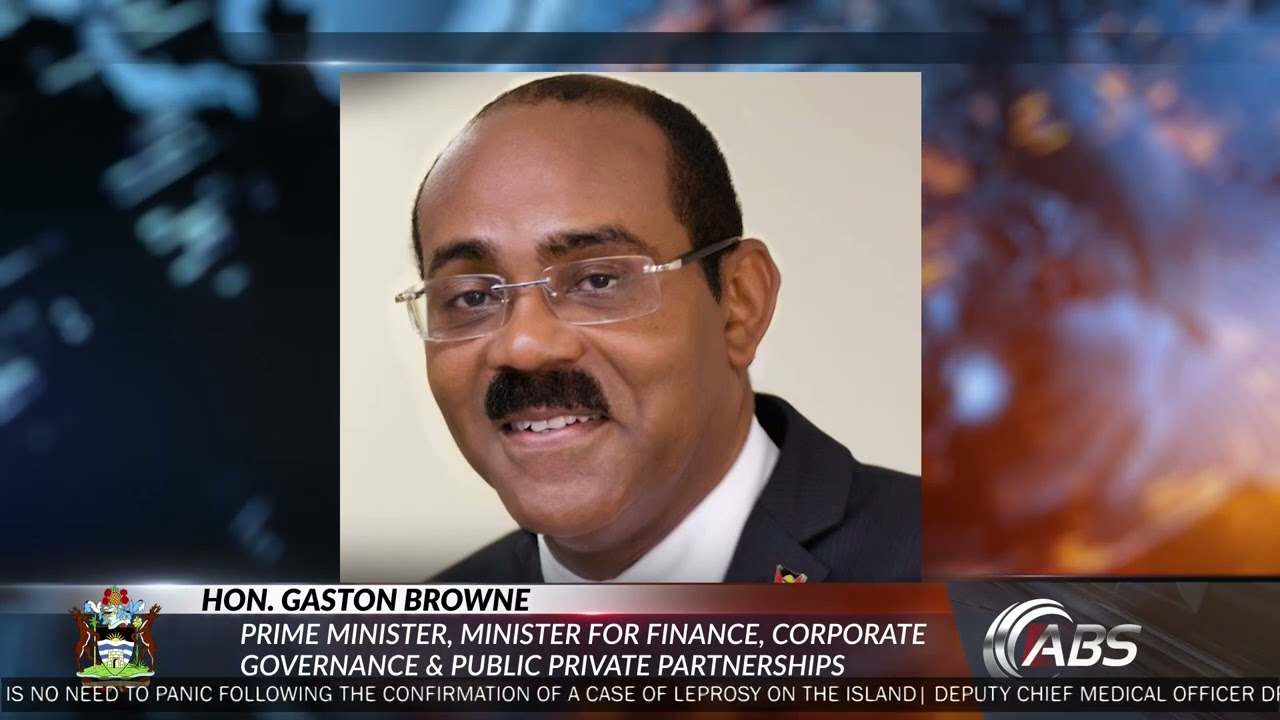
ABS EVENING NEWS (LOCAL SEGMENT & WEATHER REPORT) 14.1.2024