Local
The Oldest Story in the Book

By Professor C. Justin Robinson Pro Vice-Chancellor and Principal, The UWI Five Islands Campus
My Priest asked to give a talk to the congregations at St Pauls and St. Barnabas on the current global and regional developments. Here is my Christian bible take!
The Bible is, among many things, the story of a small people trying to survive among empires. This is not a minor theme, it is the theme, the spine that runs from Genesis through Revelation. Abraham is called out from the Mesopotamian empire; Moses confronts Pharaoh of the Egyptian Empire. The prophets thunder against the Assyrian and Babylonian empires and Jesus is born under Roman occupation, tried by a Roman governor, and executed by Roman soldiers. If you grew up in a Caribbean church, you know these stories, what you may not have noticed is how well they describe our own history and present conditions.
Let’s begin where the Bible begins its liberation story in Egypt. “The Egyptians made the children of Israel to serve with rigor, and they made their lives bitter with hard bondage” (Exodus 1:13–14). Pharaoh’s economy was elegant in its cruelty and the enslaved built the infrastructure of their own oppression.
Look at the Caribbean and tell me the structure is unfamiliar. For three hundred years we grew sugar we did not consume for people who did not pay us, under arrangements designed in London and Madrid. We pivoted to tourism, welcoming visitors to enjoy islands whose own citizens could not afford a decent standard of living. We import eighty-five percent of our food in a region with some of the most fertile soil on earth. We send our brightest graduates abroad and call the remittances a “development strategy.” Pharaoh’s economy was designed for Pharaoh and so is ours.
The post-war international order, sovereign equality, access to courts, a voice in global affairs allowed small nations to exist with some dignity. Those were the walls of our Jerusalem, and they are being dismantled by the very nations that built them. Like Nehemiah surveying the ruins by moonlight (Nehemiah 2:13), we must see clearly what has been destroyed before we can rebuild.
No scripture captures the dilemma of the small nation under great power more precisely than Jesus’s response on Roman taxation, “Render to Caesar the things that are Caesar’s, and to God the things that are God’s” (Matthew 22:21). This was not evasion, for people living under occupation, it was a framework for survival given that imperial power demands compliance, but compliance need not mean surrender of everything that matters. The coin bears Caesar’s image, so give it back, but you bear God’s image and that is not Caesar’s to claim. Caribbean leaders must
now navigate this tension daily. Jesus’s instruction was never “surrender everything,” it was, know what belongs to empire, and never forget what belongs to your people.
So, what does scripture counsel in this new reality? When Babylonian exile was a reality, not a threat but a fact, God’s instruction through Jeremiah was startling. “Build houses and live in them, plant gardens and eat their produce… Seek the welfare of the city where I have sent you into exile” (Jeremiah 29:5–7). The false prophets promised imminent rescue, but Jeremiah said, stop waiting, build where you are and invest where you are, not because exile is just, but because waiting for rescue is a kind of death. This is the Caribbean’s mandate now. “Build houses” means invest in our own institutions. “Plant gardens” means grow what we eat and create what we consume. “Seek the welfare” means our prosperity is tied to our communities not distant capitals.
King David reminds us that size is not destiny. He defeated Goliath not by acquiring the giant’s weapons but by using what he had, a sling, five stones, and the conviction that scale alone does not determine outcomes (1 Samuel 17:45). The Caribbean’s five stones are our climate expertise, our digital potential, our capacity for energy sovereignty, the proven model of OECS integration, and the power of a unified regional voice.
In the parable of the Good Samaritan, the wounded man’s own countrymen passed him by and help came from the outsider (Luke 10:30–37). Stop expecting Washington, London, or Ottawa to stop and help, we must be the Samaritan to each other. The OECS proves regional integration works, common currency, common court and labour mobility. The question is why what works for six hundred thousand people cannot work across CARICOM.
Mordecai said to Esther, “If you remain silent at this time, relief and deliverance will arise from another place, but you and your father’s family will perish and who knows but that you have come to your position for such a time as this?” (Esther 4:14). The work of survival will be done with or without us, the question is whether we participate in our own rescue. If the scale of the challenge makes us hesitate, Isaiah reminds us how God’s work begins, not with armies or institutions, but with a single voice willing to answer. “Then I heard the voice of the Lord saying, ‘Whom shall I send, who will go for us, and I said, here am I, send me.’” (Isaiah 6:8). Isaiah did not volunteer from comfort; he volunteered from conviction. The Caribbean does not need everyone to do everything. It needs enough people, in cabinet rooms, in boardrooms, in classrooms, in church halls to say, here am I.
Paul wrote to the Galatians, “It is for freedom that Christ has set us free. Stand firm, then, and do not let yourselves be burdened again by a yoke of slavery” (Galatians 5:1). The recognition that no one is coming to save us is not a cause for despair. It is the most liberating truth available. The illusion is over, the false prophets who promised that the international system would protect us, that migration would relieve us, that deference would reward us have been answered by history.
Moses’s final words to a people standing on the edge of a new reality, “I have set before you life and death, blessings and curses. Now choose life, so that you and your children may live” (Deuteronomy 30:19). We built economies our people endure. Now we must build economies they choose. The only question is whether we will act like we finally understand.

COMMISSIONER OF SPORTS PROVIDES ADVICE TO ATHLETES AHEAD OF CARIFTA GAMES

ECCB WARNS ABOUT RISKS TO THE CURRENCY UNION FROM MIDDLE EAST WAR

LOCAL WOODCARVER BURNISHES BRAND ANTIGUA AND INSPIRES YOUNG PEOPLE

HAVE YOU REPLACED YOUR EXPIRED VOTER ID CARD? – ABEC EXPLAINS THE PROCESS

SECURITY OPERATIVES COMPLETE CRUCIAL TRAINING COURSE AT AUA

OPPOSITION LEADER EJECTED FROM PARLIAMENTARY SITTING AS SPEAKER FLAYS HIM FOR ‘RUDENESS’

CWI ANNOUNCES SPECIAL PLAN FOR ITS THREE TOP PACERS
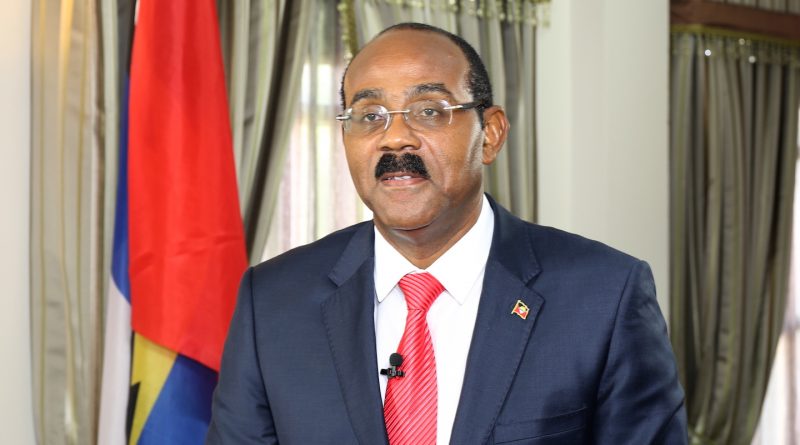
Parliament To Be Dissolved On April 1; General Election Before End Of April

SIR MOLWYN JOSEPH PRAISED BY COLLEAGUE LAWMAKERS IN HIS SWANSONG SITTING
US Court of Appeals Rules in Favour of PM Gaston Browne in Case Linked to Alfa Nero
ABS EVENING NEWS (LOCAL SEGMENT & WEATHER REPORT) 19.1.2024
ABS EVENING NEWS (LOCAL SEGMENT & WEATHER REPORT) 18.1.2024
ABS EVENING NEWS (LOCAL SEGMENT & WEATHER REPORT) 16.1.2024
ABS EVENING NEWS (LOCAL SEGMENT & WEATHER REPORT) 14.1.2024