Op-Ed
“They Want Us To Die”: The Triple C Crisis, the Caribbean Person, and What We Must Do for Ourselves
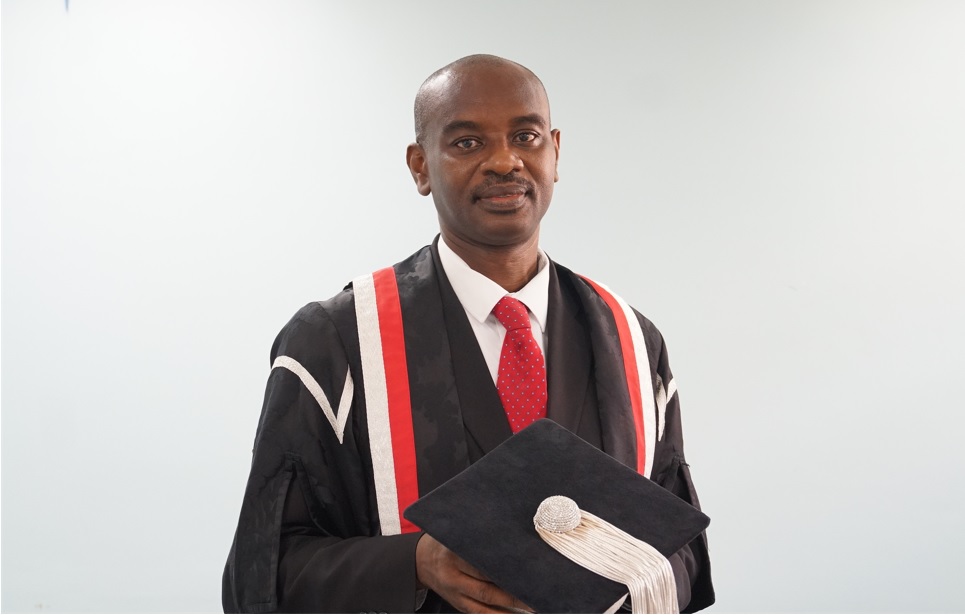
By Prof. C. Justin Robinson, Pro Vice-Chancellor and Campus Principal of The University of the West Indies Five Islands Campus in Antigua and Barbuda
On August 1, 2023, I assumed the role of Campus Principal at The University of the West Indies Five Islands in Antigua and Barbuda, determined to make real the Vice Chancellor’s call for UWI to be an activist university. At my induction ceremony on January 27 2024, I framed my principalship around what I called the Triple C Crisis: the Climate Crisis, the Crime Crisis, and the Chronic Non-Communicable Diseases Crisis. Three interlocking emergencies destroying Caribbean lives, potential, and futures. After watching the 50th CARICOM Heads of Government opening ceremony in St. Kitts this week, I believe more than ever that confronting these crises cannot rest with politicians alone. It must rest with us and let me say why through the stories of real people I know.
I. The Brother and the Mother
A brother sits in Anguilla, staring at his phone. The last message from his sister in Cuba reads: They want us to die! His sister, their mother’s daughter, born of a union with a Dominican man who settled in Cuba, lives on an island the United Nations warns is approaching humanitarian collapse. Cuba’s American-imposed fuel blockade has closed schools, grounded aircraft, darkened homes for twenty hours a day, and left garbage rotting in Havana’s streets. There are no half-sisters in Afro-Caribbean culture, she is his sister and her crisis is his crisis.
His mother wonders about her other son in Miami. Will I get the visa to attend his wedding? Can I get to see my child married?
This family watched CARICOM’s leaders speak from the Marriott Dome in Basseterre on Tuesday night. Their words felt both vital and hopelessly distant. They heard Jamaica’s Andrew Holness warn that a prolonged crisis in Cuba will affect migration, security, and stability across the basin. They heard St. Kitts’ Terrance Drew deliver an arithmetic that should terrify every leader in that room, Cuba’s population is nine to twelve million, excluding Haiti, the rest of CARICOM does not amount to ten million.
And they heard Trinidad’s Kamla Persad-Bissessar tell the room, to our delight, that crime in Trinidad and Tobago has fallen by 42%. They also heard “who vex, loss” as she lauded President Trump and Secretary Rubio for deploying the US military in Caribbean waters, declared she could not depend on CARICOM for security, and called the regional body “unreliable.”
They heard about the dilemma around Cuba’s political system. Our leaders had no dilemmas about Cuba’s political system when Cuban aid was being accepted. This newfound moral dilemma among some of our leaders seemed curious, as the leaders shared the room with the prominently seated Saudi delegation, a detail worth lingering on, given that no one at the podium or from the USA was demanding democratic elections in Riyadh.
The brother turned off the television and his mother went to bed without an answer. The next morning she saw a clip of President Trump joking about people being afraid to go fishing during his State of the Union address.
II. The Wife Who Cannot Sleep
In the village of Fancy, St. Vincent and the Grenadines, a wife lies awake listening for the sound of her husband’s boat engine. Since September 2025, the United States military has carried out at least forty-four strikes against vessels in Caribbean and Pacific waters, killing at least one hundred and fifty people. Washington calls them narco-terrorists. Families and governments say many were fishermen. Human Rights Watch has called the strikes “unlawful extrajudicial killings.”
This wife does not know geopolitics but she knows the sea has always fed her family. She knows that tonight, her husband is on that sea, in a small boat that looks exactly like every other small boat that has been blown to pieces without evidence, without warning, without apology. She can see the lights of Vieux Fort in St. Lucia across the water, the same waters where someone’s partner died on a boat just like her husband’s.
III. The Seamoss Vendor, the Boutique Owner, and the Factory Worker
In Antigua, a seamoss vendor does his accounts. His profit margins depend on bottles sourced at the China price. Not any other price, the China price. When Washington pressures Caribbean nations to sever ties with Beijing, it is not a diplomatic abstraction to him, it is the survival of his enterprise. A small island cannot eat geopolitics, it must eat. When one global power offers you bullets and the other offers you bottles, a small island’s choice is not a moral one, but a survival instinct.
In Grenada, a boutique owner stocks affordable fashion sourced from Shein. This is not a confession, it is the reality of retail in a small island developing state. When supply chains are weaponized in great-power competition, she is a woman watching her margins vanish.
In Trinidad, a factory worker clocks in every morning at a plant whose business depends on exports to the Eastern Caribbean under the CARICOM Common External Tariff. When her Prime Minister calls the regional body “unreliable,” she wonders, unreliable for whom? That tariff is her pay cheque.
And somewhere in the Eastern Caribbean, a high school waits for a Huawei-equipped computer lab that may never arrive. The school did not choose Chinese technology over any other, there is no similar offer from anywhere. The students will not understand the geopolitics but they will understand that everyone talks about coding but they still do not have the computers.
IV. The Triple C Crisis
Every person above is living inside the Triple C Crisis, whether they name it or not.
The Climate Crisis is here. Hurricane Melissa made landfall in Jamaica on October 28, 2025 as one of the strongest Atlantic hurricanes ever recorded, with winds of 185 miles per hour, killing at least ninety-five people and causing an estimated forty-eight to fifty-two billion dollars in damage. Cuba’s eastern provinces, still recovering from Melissa, have no fuel to run recovery operations. Our reefs are bleaching, our coastlines are eroding and our aquifers are salinizing.
The Crime Crisis is our deepest wound. We are people who know how to love and that is what makes the violence so incomprehensible. In 2024, Trinidad and Tobago recorded a homicide rate of approximately 45.7 per 100,000, Jamaica approximately 40 per 100,000, each roughly eight to nine times the US rate. The wife in Fancy is afraid not only of American missiles but that her sons will become statistics in a crisis that predates any foreign intervention and will outlast every foreign policy. She cannot accept that extra judicial bombing of boats is the best we can do to solve the crime crisis. It is too easy to write the role of American made guns and American addiction out of the Caribbean drug and crime story.
The NCD Crisis hides behind our beauty. We are not only the beach, reggae, and carnival capitals of the world, we are also the hypertension and diabetes capitals of the world. Over a third of Caribbean adults are hypertensive and barely a third have their blood pressure controlled. I am one of the victims and take my meds daily. The seamoss vendor is, without knowing it, part of the solution, promoting indigenous, nutritious products in a region that imports too much of what it eats.
V. The Woman Nobody Elected
Let me tell you about a woman I know who runs a small community health initiative in the Eastern Caribbean. No government funding, no foreign grant, just a conviction that her neighbours should not die from conditions a blood pressure cuff could have caught. She organizes screening days at the church hall, she tracks who comes back and who does not, she calls the ones who do not. Nobody elected her, nobody will give her a podium at the Marriott Dome, but she is saving more lives than most communiqués.
Remember her as she is the answer to the question I am about to ask.
VI. What Tuesday Night Taught Me
The leaders said many of the right things, but speeches are what leaders do, the question is what do we do.
Foreign priorities will change, American administrations come and go, the Cuba blockade may ease or tighten, but the Triple C Crisis will still be here. It was here before Donald Trump and it will be here next year and the year after that.
We cannot outsource the survival of our people to foreign powers or to leaders who come and go. But I am not here to castigate our politicians. They are playing a weak hand in a rigged game. When a superpower blockades your neighbour, blows up boats in your waters, and sends its Secretary of State to explain why this is all for your own good, no communiqué is enough. Our leaders need support, not from Washington, not from Beijing but from us, Caribbean people who understand that the cavalry is not coming because we are the cavalry.
VII. What You Can Do Starting Today
This is not where I list policy recommendations for heads of government. They have had fifty years of those, this is where I ask what you can do.
Against climate: Grow something. A kitchen garden reduces your dependence on imported food shipped on fossil fuels. Buy from the farmer before the supermarket. Harvest rainwater. Teach your children a hurricane plan in the sunshine. If you run a church, make your grounds a community garden.
Against crime: Mentor a young man. I cannot say this loudly enough. The Caribbean’s crime crisis is overwhelmingly a crisis of young Black men killing other young Black men. Every dataset confirms it. This is a problem of disconnection, young men cut off from purpose, belonging, and legitimate paths to dignity. If you are an older man who found a way, go back and show a younger man the path. If you own a business, hire a young person who needs a chance more than a credential.
Against NCDs: Move your body. Cook your food. Know your numbers. When last did you check your blood pressure? Reduce the sugar, the salt, the processed imports. Rediscover the ground provisions and local fruits our grandmothers knew were medicine before we had a word for it. Dance thirty minutes a day, we are Caribbean, for heaven’s sake, we know how to move. We cannot build a thriving CARICOM on a population riddled with preventable disease.
VIII. What Our Organizations Must Do
Civil society is the Caribbean’s most underused asset. Our diaspora, our churches, our service clubs, our credit unions, these outlast any government. They must now step up, not to replace our leaders, but to support them.
The woman with the blood pressure cuff and the church hall is not an anecdote. She is a model! Every civic organization should adopt at least one Triple C initiative. A Rotary club that mentors young men is fighting crime. A credit union financing solar panels is fighting climate change. A university training the next generation of Caribbean problem-solvers, as we are trying to do at UWI, is fighting all three.
IX. Beyond Words
The leaders will leave Basseterre on Friday, Rubio will fly home and the communiqué will be filed. On Monday morning, the seamoss vendor will still need affordable bottles. The factory worker will still need the CET. The fisherman in Fancy will still push off in the dark, and his wife will still lie awake until she hears his engine. The brother will still check his phone. The mother will still wonder about the wedding.
Caribbean people have survived slavery, colonialism, indentureship, hurricanes, volcanoes, earthquakes, pandemics, and fifty years of promises. We are still here. We still dance, sing, cook, worship, fish, farm, study, and build with a resilience the rest of the world admires but does not fully understand. That resilience is not a consolation prize, it is a resource, the most renewable resource we possess.
The brother cannot save his sister alone, but he can join with others who refuse to wait for a communiqué. The mother may not make, the wedding, but she can make sure her community is stronger for the grandchildren who follow. The wife in Fancy may not stop the missiles but she can help build a village where her sons choose nets over guns. The seamoss vendor can keep selling health in a bottle if we, his customers, his neighbours, his country, make sure he can.
It falls to us now, not to Basseterre, not to Washington, not to Beijing but to us.







COMMISSIONER OF SPORTS PROVIDES ADVICE TO ATHLETES AHEAD OF CARIFTA GAMES

ECCB WARNS ABOUT RISKS TO THE CURRENCY UNION FROM MIDDLE EAST WAR

LOCAL WOODCARVER BURNISHES BRAND ANTIGUA AND INSPIRES YOUNG PEOPLE

HAVE YOU REPLACED YOUR EXPIRED VOTER ID CARD? – ABEC EXPLAINS THE PROCESS

SECURITY OPERATIVES COMPLETE CRUCIAL TRAINING COURSE AT AUA

OPPOSITION LEADER EJECTED FROM PARLIAMENTARY SITTING AS SPEAKER FLAYS HIM FOR ‘RUDENESS’

CWI ANNOUNCES SPECIAL PLAN FOR ITS THREE TOP PACERS
Parliament To Be Dissolved On April 1; General Election Before End Of April

SIR MOLWYN JOSEPH PRAISED BY COLLEAGUE LAWMAKERS IN HIS SWANSONG SITTING
US Court of Appeals Rules in Favour of PM Gaston Browne in Case Linked to Alfa Nero
ABS EVENING NEWS (LOCAL SEGMENT & WEATHER REPORT) 19.1.2024
ABS EVENING NEWS (LOCAL SEGMENT & WEATHER REPORT) 18.1.2024
ABS EVENING NEWS (LOCAL SEGMENT & WEATHER REPORT) 16.1.2024
ABS EVENING NEWS (LOCAL SEGMENT & WEATHER REPORT) 14.1.2024