Op-Ed
When Small States Think Big: The Opportunity Beyond CHOGM
From SIDS4 to CHOGM, Antigua and Barbuda is demonstrating what can happen when vision, courage, and strategic thinking are matched by intentional action.
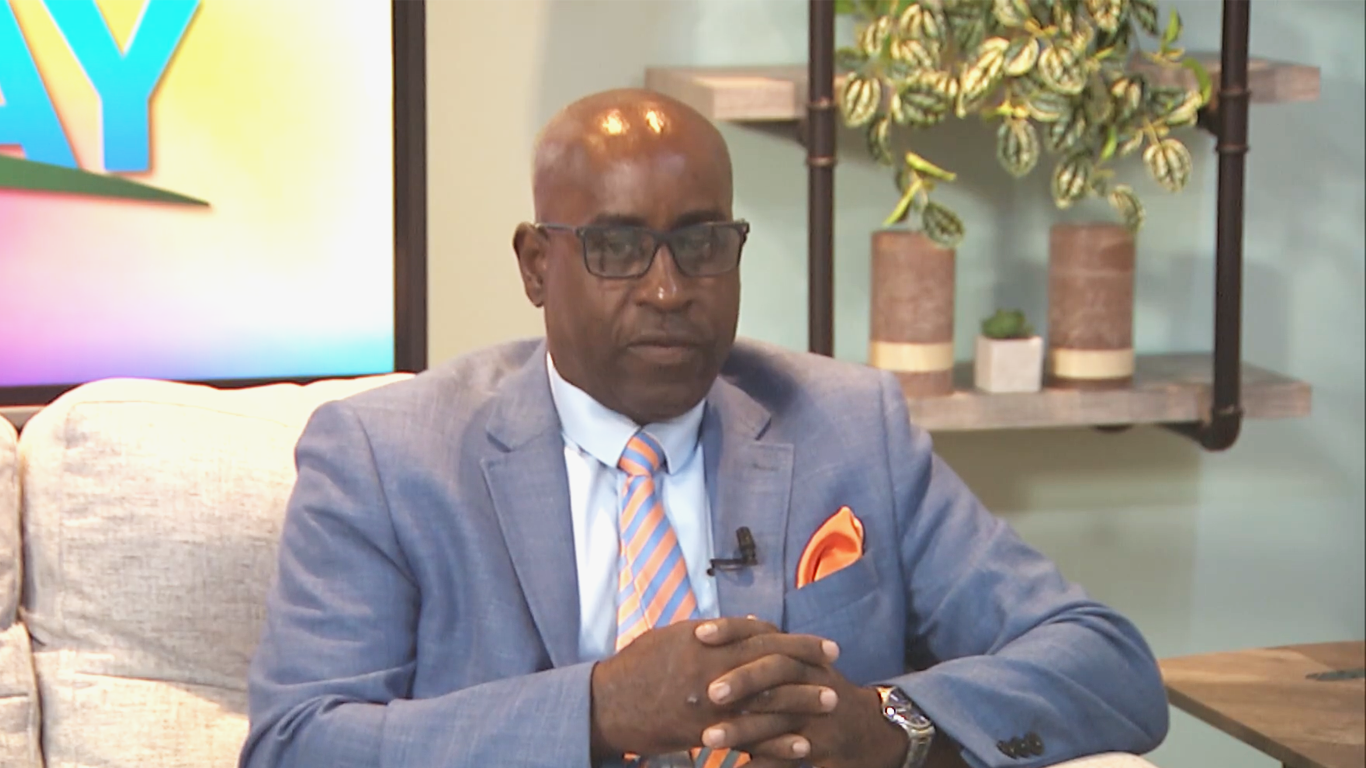
By Garfield Joseph, MBA
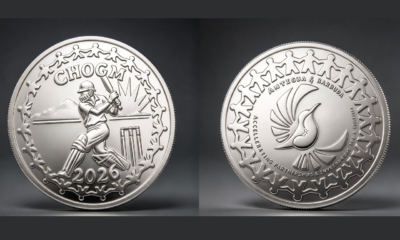
Next week, leaders from across the Commonwealth will arrive in Antigua and Barbuda for CHOGM. The cameras will roll, motorcades will move through our streets, conference halls will fill with delegates, and for a brief moment, the attention of a significant portion of the world will rest on our twin-island nation.
But long after the official photographs are taken and the final delegates depart, one question will remain:
What will Antigua and Barbuda do with the opportunity?
That question may be more important than the event itself.
History teaches us that the future of small states is rarely determined by their size, population, or natural resources alone. More often, it is determined by their ability to recognize opportunities and pursue them with vision, discipline, and intentionality.
Small states that thrive understand a simple truth: moments matter, but only if they are converted into momentum.
Antigua and Barbuda has done this before.
More than four decades ago, few would have predicted that a small Caribbean nation could evolve into one of the region’s leading tourism destinations. Yet through deliberate investment, partnership, and long-term planning, tourism has become one of the principal pillars of the national economy.
The transformation of the country’s airport infrastructure offers another example. The construction of the modern V.C. Bird International Airport was not simply about replacing an aging terminal. It was a strategic investment in the country’s future, creating the capacity and visitor experience needed to support sustained tourism growth.
The story continued at our seaport. The partnership with Global Ports Holding and the development of Antigua Cruise Port represented far more than a physical upgrade of the cruise facility. It reflected a recognition that the cruise industry was changing and that Antigua and Barbuda needed to position itself to capture a larger share of future growth. What began as an infrastructure project became part of a broader vision to enhance the visitor experience, strengthen the cruise sector, and create more economic opportunities for local businesses.
The benefits of these strategic investments can be seen in the growth of visitor arrivals over the years. Today, Antigua and Barbuda welcomes hundreds of thousands of stay-over visitors and cruise passengers annually. Those outcomes were not accidents of geography. They were the result of leaders identifying opportunities early and pursuing them with persistence and purpose.
The same can be said for Antigua Sailing Week, which began as a local sailing event and grew into an internationally recognized attraction that places Antigua and Barbuda on the global sporting calendar each year.
These successes have something in common.
They all began as opportunities.
More importantly, they were supported by intentional action.
CHOGM can be viewed through the same lens.
It takes a certain amount of courage for the leader of a small island nation to step forward and say: We can host one of the most important gatherings in the Commonwealth.
It is easy to underestimate what that means.
Hosting an event of this magnitude requires confidence in the country’s institutions, infrastructure, people, and reputation. It requires belief that the nation can operate on a global stage and deliver successfully. Most importantly, it requires a willingness to think bigger than the limitations that are often associated with small states.
In many respects, the decision by Prime Minister Gaston Browne and his administration to pursue CHOGM reflects the same spirit that led Antigua and Barbuda to successfully host the Fourth International Conference on Small Island Developing States (SIDS4) in 2024. Both events required vision. Both required confidence. Both represented a belief that a nation of our size could convene the world around issues that matter.
That should not be dismissed lightly.
Viewed historically, this may well become one of the most significant periods in Antigua and Barbuda’s modern diplomatic journey. Within just a few years, the country has positioned itself as a venue for major international dialogue involving global leaders, policymakers, development institutions, and investors.
For a small island nation, that is no small accomplishment.
Yet the larger opportunity lies in ensuring that these moments are connected to a long-term vision for national development.
The world is full of opportunities. What separates successful countries, businesses, and organizations from those that struggle is not the availability of opportunity but the ability to capitalize on it.
This is where strategic thinking becomes so important.
An event mindset focuses on execution.
A strategic mindset focuses on outcomes.
An event mindset asks whether the meeting was successful.
A strategic mindset asks what the meeting can produce.
Can stronger diplomatic relationships emerge?
Can local businesses secure new partnerships?
Can Antigua and Barbuda attract investment in renewable energy, tourism, technology, infrastructure, education, and climate resilience?
Can regional cooperation be strengthened?
Can our international reputation be elevated?
Can our young people benefit from connections forged during the gathering?
These are the questions that strategic leaders ask.
For small island developing states, strategic thinking is not optional. It is essential.
Unlike larger nations, we cannot rely on massive domestic markets or limitless resources. Our advantage often lies in agility, relationships, innovation, and the ability to move quickly when opportunities arise.
The countries that consistently outperform expectations understand this principle.
They think beyond the immediate event.
They think beyond the ribbon cutting.
They think beyond the headlines.
They focus on what comes next.
Imagine if every significant conversation held during CHOGM generated a follow-up action plan. Imagine if every investment lead received dedicated attention. Imagine if local entrepreneurs, educators, and innovators connected with networks that opened doors far beyond our shores.
That is how opportunities become catalysts.
That is how moments become movements.
And that is how small states create outsized impact.
As Antigua and Barbuda prepares to host CHOGM, there is every reason to celebrate the achievement. Hosting an event of this scale reflects confidence in our country’s ability to organize, lead, and welcome the world.
Yet the true measure of success may not be what happens next week.
It may be what happens over the next decade.
Years from now, few people will remember every speech that was delivered or every communiqué that was issued.
But they will remember the investments that were secured.
They will remember the partnerships that were created.
They will remember the opportunities that were pursued.
And they will remember whether Antigua and Barbuda used this moment to build something larger than the event itself.
For small states, that has always been the challenge.
And it has always been the opportunity.
Because while we may be small in size, there is no reason we should be small in vision.
The countries that shape their future are rarely the ones with the most opportunities. They are the ones bold enough to recognize them, courageous enough to pursue them, and disciplined enough to turn them into lasting progress.
About the Author
Garfield Joseph, MBA, is the Executive Director of a public sector organization in Antigua and Barbuda and an Adjunct Lecturer at The University of the West Indies Five Islands Campus. He writes regularly on strategic management, entrepreneurship, investment, and national development.








When Small States Think Big: The Opportunity Beyond CHOGM

ANTIGUAN AND BARBUDAN CONTINGENT DEPARTS FOR YOUTH OLYMPICS

KING CHARLES ACKNOWLEDGES ‘GREAT SUFFERING AND INJUSTICES OF THE PAST’

REHABILITATION EFFORTS RECEIVE BOOST AT DENIS BOWERS CENTRE

CABINET ESTABLISHES COMMITTEE TO CONSIDER POSSIBLE BUS FARE INCREASE

A&B COULD DECIDE TO SUSPEND ITS CIP AMID EU PRESSURE

‘THIS IS A RENAISSANCE PROJECT’ – PM BROWNE HAILS OPENING OF PERFORMING ARTS CENTRE

SENIOR NETBALLERS PREPARE FOR ‘BATTLE OF THE ISLES’

‘I’M JUST REALLY HAPPY’ – CREATIVES WELCOME NEW PERFORMING ARTS CENTRE

BOE AND RICHIE’S SHOOTERZ TRIUMPH IN ABBA PLAYOFFS QUARTERFINALS
ABS EVENING NEWS (LOCAL SEGMENT & WEATHER REPORT) 19.1.2024
ABS EVENING NEWS (LOCAL SEGMENT & WEATHER REPORT) 18.1.2024
ABS EVENING NEWS (LOCAL SEGMENT & WEATHER REPORT) 16.1.2024
ABS EVENING NEWS (LOCAL SEGMENT & WEATHER REPORT) 14.1.2024