
Op-Ed
BUDGET BASICS 2 Taxes, fees, gifts and passports

Explainer 2: Where the money comes from UWI Five Islands Campus OECS Budget Watch
A government has four main sources of income.
1. Tax
What residents and businesses pay.
Sales tax (VAT, ABST), import duties, income and property taxes.
2. Non-tax
Everything else the government earns.
Fees, licences, dividends and, in five of our countries, Citizenship by Investment (CBI).
3. Grants
Gifts from other governments and agencies.
4. Borrowing
Anything still missing is borrowed.
Why it matters. Tax revenue is the steady part: it rises and falls with the economy, but it does not vanish. Non-tax revenue and grants can change quickly, because they depend on decisions made somewhere else. A budget built mostly on taxes is slower but safer, while a budget built on one large outside source is exposed.
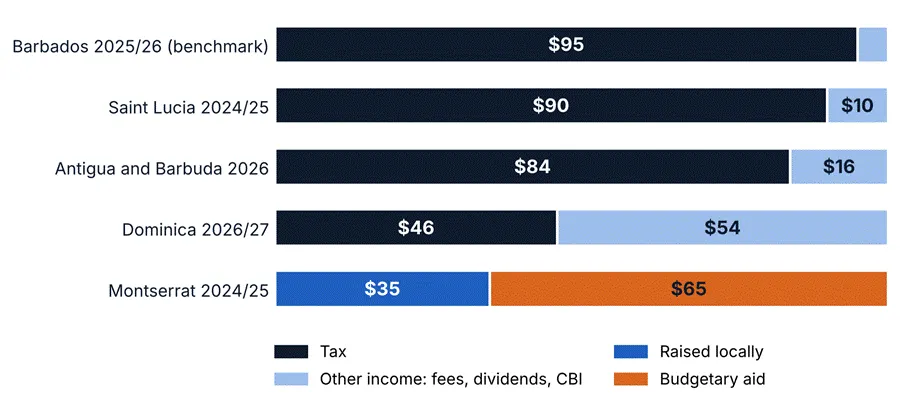
The mix varies widely
Out of every $100 of recurrent revenue in the budget.
63%
of Dominica’s recurrent revenue in 2024/25 was budgeted to come from CBI: EC$760 million.
EC$168m
from sales of the .ai internet domain in Anguilla in the first nine months of 2025.
What happens when one source falls
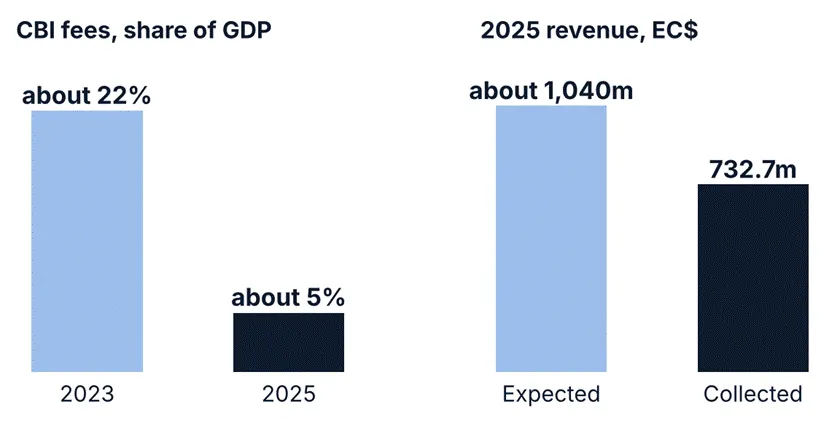
In St Kitts and Nevis, CBI fees fell from about 22% of GDP in 2023 to about 5% in 2025, on IMF figures. The 2025 budget expected about EC$1.04 billion in recurrent revenue, while the estimated outturn was EC$732.7 million.
What to watch in 2027
Ask how much of the revenue estimate comes from a single source the government does not control.










BUDGET BASICS 2 Taxes, fees, gifts and passports

November 30 Launch Date for Mobile Number Portability

Suspect Eludes Police While Using Hospital Restroom

SOCIAL PROTECTION BOARD HONOURS SENIORS WITH TEA PARTY

NO IFS OR BUTTS – POLICE TO CLAMP DOWN ON SMOKING IN PUBLIC

NEW OAS INITIATIVE SEEKS TO TURN POTENTIAL INTO PROSPERITY

ARSON SUSPECTED AS POLICE PROBE SEVERAL FIRES

Freeman’s Village Murder Case Adjourned

HUNDREDS OF DOMINO SETS TO BE DISTRIBUTED TO PUBLIC SCHOOLS

TEAM ANTIGUA ISLAND GIRLS UNVEIL COMPELLING DOCUMENTARY FILM

ABS EVENING NEWS (LOCAL SEGMENT & WEATHER REPORT) 19.1.2024

ABS EVENING NEWS (LOCAL SEGMENT & WEATHER REPORT) 18.1.2024

ABS EVENING NEWS (LOCAL SEGMENT & WEATHER REPORT) 16.1.2024
ABS EVENING NEWS (LOCAL SEGMENT & WEATHER REPORT) 14.1.2024