Op-Ed
Haiti: When the Promise of a Haitian-Led Solution Begins to Fade
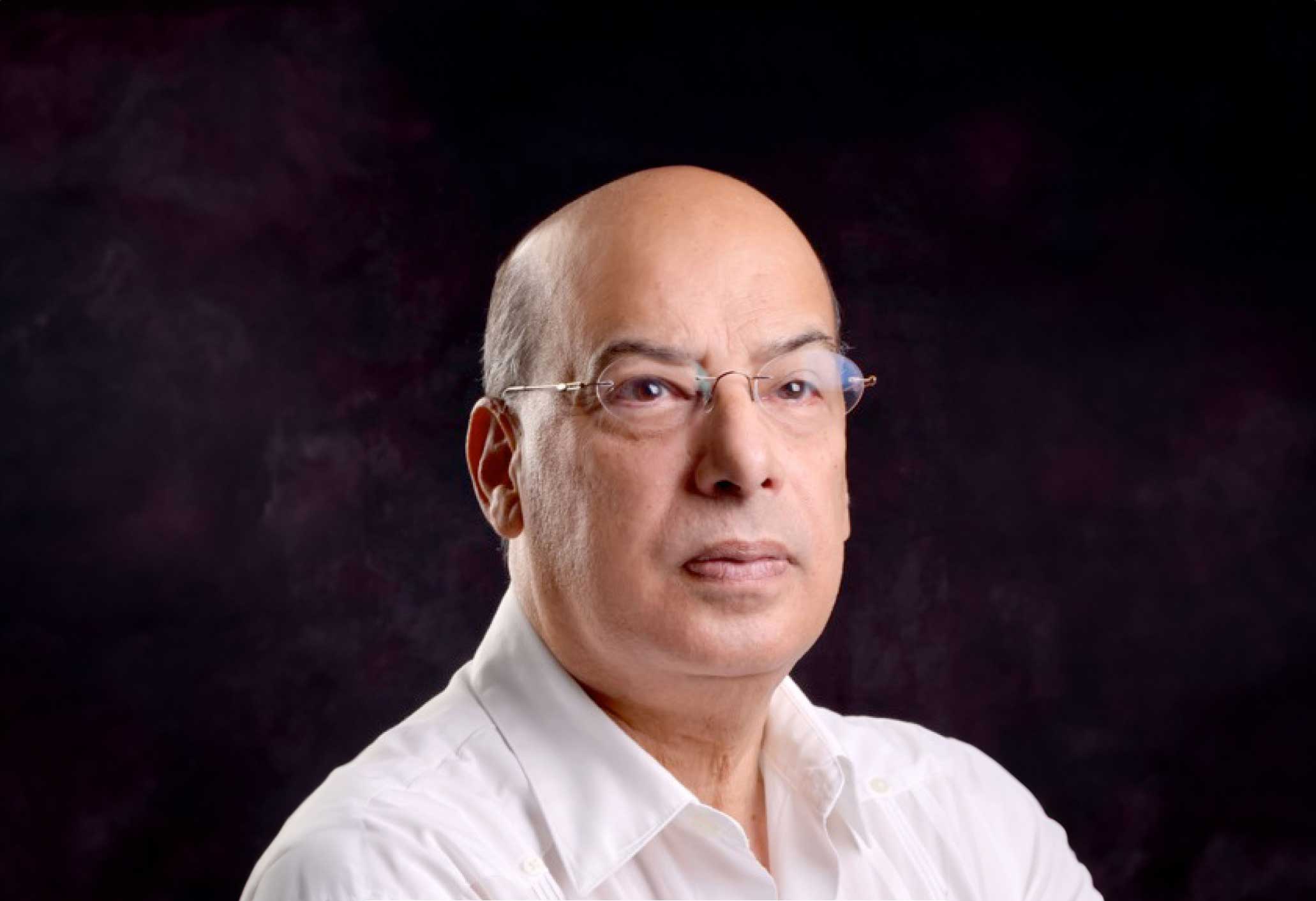
By Sir Ronald Sanders
Who speaks for Haiti? It is a question the international community can no longer avoid.
For years, governments and international organisations have insisted that the country’s deepening crisis must have a “Haitian-led solution”. The principle is sound. Haitians must determine their country’s future. But the expression is wearing thin because there is little evidence of a sufficiently legitimate, representative and coherent political process capable of delivering such a solution.
The issue is not whether the solution should be Haitian-led. It is who may legitimately claim to lead it, and by what mandate.
UN experts have presented mounting evidence alleging that some persons who have exercised political influence in Haiti maintained relationships with the armed gangs responsible for much of the country’s destruction.
A report by the United Nations Panel of Experts on Haiti describes connections between armed groups and political, economic and security actors. It identifies former legislators allegedly involved in supporting criminal organisations and warns that relationships between gangs and political figures could be used to influence elections.
The report alleges that former parliamentarian Alfrédo Junior Antoine supplied weapons, ammunition and financial resources to armed groups. It also alleges that former Senator Nenel Cassy supported armed men to advance his political interests. Both have denied the allegations.
The experts warn that political figures with historical connections to gangs may exploit those relationships to mobilise support, intimidate opponents and influence electoral outcomes.
These allegations require investigation and due process. But their wider significance is unmistakable. Haiti’s criminal organisations do not operate in isolation from the country’s political and economic life.
Gangs have been used to control territory, protect commercial interests, intimidate opponents and acquire influence.
The question, therefore, is not simply how Haiti can defeat its gangs. It is how the country can establish legitimate government when networks that have exercised political influence are implicated in sustaining criminal power.
A Chatham House study published in August 2026 confronts this difficulty directly. Its authors observe that diplomats routinely call for Haitian leadership without adequately answering which Haitians are supposed to provide it.
Based on interviews with 1,332 Haitian adults in May, the study reveals the wishes of ordinary Haitians and the conduct of their political class.
More than 75 per cent of respondents expressed little or no trust in politicians. Only 2.9 per cent had a great deal of trust in them.
Yet almost 90 per cent considered elections important to Haiti’s future, while 82.9 per cent wanted them held in 2026 or 2027. The survey also found that 83.4 per cent opposed allowing gang members or gang leaders to hold positions in government, while 66.9 per cent rejected amnesty for armed group members.
These findings suggest that Haitians have not abandoned democracy, legitimate government or accountability. What they distrust is a political class that has failed to deliver them.
The absence of agreement among politicians should not be mistaken for an absence of national aspirations. Nor can an arrangement among competing political interests automatically be described as “Haitian-led” simply because its participants are Haitian.
The electoral timetable has now been thrown into uncertainty. Presidential and legislative elections had been scheduled for 13 December 2026, but the Provisional Electoral Council has extended candidate registration until 31 October, postponed the campaign timetable and indicated that a revised electoral calendar will be published.
Even if another date is announced, the deeper questions remain: who will control the political process, and will criminal organisations or their sponsors influence its outcome?
International fatigue is another danger.
Yet progress remains painfully limited. Other conflicts, economic pressures and security priorities compete for attention and resources.
If international engagement weakens, ordinary Haitians will suffer. Those who profit from weapons and drug trafficking, extortion, kidnapping, territorial control and diverted public resources will not. Political and economic actors who benefit from weakened institutions have little interest in independent courts, accountable policing or transparent administration.
Haiti must not be abandoned because its political actors cannot agree. That would leave the population to bear the consequences of failures for which ordinary citizens have little responsibility. Equally, international assistance cannot mean financing one transitional arrangement after another without clear obligations, measurable results and accountability.
Haitian ownership must be preserved, but its meaning must be clarified.
It should mean supporting institutions with lawful mandates, transparency and public accountability. Participation must extend beyond political factions to civil society, community organisations, women and young people, professional and religious bodies, and legitimate private-sector representatives.
It should mean listening to the Haitian population, whose priorities the Chatham House study has helped to illuminate. It should also mean investigating the networks identified by the UN experts, enforcing sanctions, interrupting weapons supplies and ensuring that persons credibly implicated in serious crimes face independent judicial scrutiny.
The Gang Suppression Force and the Haitian National Police must receive the resources necessary to protect communities, alongside the judicial and administrative institutions without which security gains cannot endure.
The same Chatham House survey revealed understandable caution. Although 49.5 per cent supported the Force’s presence, 54.2 per cent doubted that it could accomplish its mission. That scepticism strengthens the case for adequate resources, clear objectives, measurable performance and accountability.
None of this requires foreign governments to choose Haiti’s leaders or dictate its constitutional future. That would undermine the sovereignty international assistance is supposed to protect. But sovereignty must not become an excuse, within Haiti, for ignoring criminal influence, institutional failure or the absence of accountable leadership.
The Caribbean Community (CARICOM) and the Organization of American States (OAS) have a particular responsibility to insist upon this distinction. Their engagement should broaden Haitian participation and strengthen institutions capable of commanding public confidence.
Haiti’s tragedy is not that its people lack the desire for democracy. It is that the institutions through which their wishes should be expressed have been weakened, while armed groups and their associates have acquired extraordinary influence.
The expression “Haitian-led solution” should never be abandoned as a principle. But it must not be invoked, whether by Haitian political actors or international partners, as a substitute for confronting the realities that have repeatedly prevented such a solution from becoming legitimate, meaningful and sustainable.
A genuinely Haitian-led solution requires more than agreement among political factions. It requires an inclusive national process, transparent and time-bound transitional arrangements, the exclusion of criminal influence, stronger public institutions and credible elections in which Haitians can freely choose their leaders. International partners should support that process with security, resources and technical assistance, while insisting upon accountability and measurable progress.
The Haitian people have the right to determine their future. The task now is to ensure that this right belongs to them, and not to the gangs or those who sustain them.
(The writer is Antigua and Barbuda’s Ambassador to the US and the OAS. He is also Chancellor of the University of Guyana. The views expressed are his own)

Haiti: When the Promise of a Haitian-Led Solution Begins to Fade

All Four Juveniles Back in Police Custody Following Escape From Bolans Police Station

Secured: Daily British Airways Flights into Antigua Through April 2027

RESIDENTS URGED TO FULLY SUPPORT INDEPENDENCE FESTIVITIES

LIONEL MESSI SCORES IN EMOTIONAL SWANSONG FOR ARGENTINA

2,156 Pounds of Waste Removed from McKinnons Wetlands

Minister Kiz Johnson to Attend OECS Human and Social Development Meeting

STRUCTURAL WORK COMPLETED ON NATIONAL PERFORMING ARTS CENTRE

BENNA BOYS TROUNCE WINLESS ANGUILLA IN NATIONS LEAGUE

BERNARD DOWDY REIGNS IN NINE-BALL POOL COMPETITION

ABS EVENING NEWS (LOCAL SEGMENT & WEATHER REPORT) 19.1.2024
ABS EVENING NEWS (LOCAL SEGMENT & WEATHER REPORT) 18.1.2024
ABS EVENING NEWS (LOCAL SEGMENT & WEATHER REPORT) 16.1.2024
ABS EVENING NEWS (LOCAL SEGMENT & WEATHER REPORT) 14.1.2024