News
Sir Ronald Sanders invited to deliver St. Paul’s 190th Anniversary Lecture on Racism and Reparations in New York
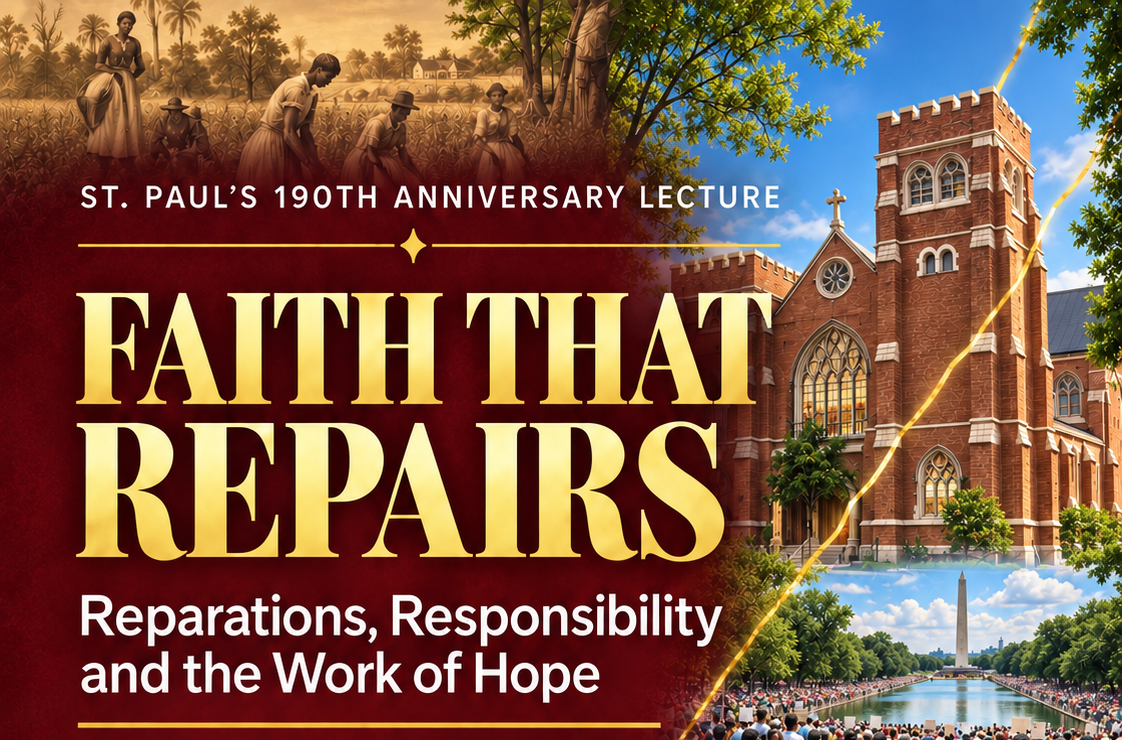
Sir Ronald Sanders invited to deliver St. Paul’s 190th Anniversary Lecture on Racism and Reparations in New York Sir Ronald Sanders has been invited to deliver the lecture commemorating the 190th anniversary of St. Paul’s Episcopal Church in the Village of Flatbush, Brooklyn, New York, on Saturday, 12 September 2026.
Titled “Faith That Repairs: Reparations, Responsibility and the Work of Hope,” the lecture will confront the racism created to justify African enslavement and colonial exploitation, its continuing consequences, and the case for reparations.
The setting gives the lecture special significance. St. Paul’s was founded in 1836 in a Flatbush community where slavery had been deeply entrenched and where the remains of enslaved and formerly enslaved Africans lie in the historic African Burial Ground.
Sir Ronald will argue that slavery was not simply a cruel practice of the past. It was an organised economic and racial system, protected by states, enforced by law and financed by banks, merchants and insurers. Although legal ownership of human beings ended, the racial inequalities and institutional advantages produced by that system did not disappear with emancipation.
The lecture will make clear that reparations is neither revenge nor charity, and that present generations are not being accused of personal guilt. It is about the responsibility of states and institutions that inherited wealth, property, authority and advantage from slavery and colonialism to help repair their continuing consequences.
“Reparations is the point at which remembrance accepts responsibility, and responsibility becomes repair,” the lecture declares.
Drawing upon Caribbean and American history, Christian teaching and recent United Nations action, Sir Ronald will examine the responsibility of governments, churches, universities, banks, insurers and other institutions. He will call for practical reparations through education, health, development finance, debt relief, cultural restoration and the opening of historical records.

Minister Johnson Pushes for Caribbean Financing Bloc, Warns Disaster Aid Must Reach Islands Faster

GRENADES AND BULLETS FIRE INTO KNOCKOUT CUP SEMIFINALS

GOVERNMENT EYES HOTEL PROJECTS TO INCREASE LOCAL TOURISM OWNERSHIP

ANTIGUANS AND BARBUDANS JOIN IN CALL FOR END TO EMBARGO AGAINST CUBA

A&B COULD DECIDE TO SUSPEND ITS CIP AMID EU PRESSURE

IMF POINTS TO POTENTIAL REVENUE FALLOUT FROM THREAT TO CIP
A&B COULD DECIDE TO SUSPEND ITS CIP AMID EU PRESSURE

CHINESE OFFICIALS HOLD CULTURAL EXCHANGE FOR YOUTH PARLIAMENTARIANS

UNDER-15 FOOTBALLERS EN ROUTE TO AZERBAIJAN FOR WORLD CUP FESTIVAL

‘NORMAL BUSINESS WILL GO ON’ – POLICE ALLAY FEARS OF EXPANSIVE LOCKDOWN FOR CHOGM

ABS EVENING NEWS (LOCAL SEGMENT & WEATHER REPORT) 19.1.2024
ABS EVENING NEWS (LOCAL SEGMENT & WEATHER REPORT) 18.1.2024
ABS EVENING NEWS (LOCAL SEGMENT & WEATHER REPORT) 16.1.2024
ABS EVENING NEWS (LOCAL SEGMENT & WEATHER REPORT) 14.1.2024