
Local
PM Browne Responds to Caribbean Heads of Judiciary
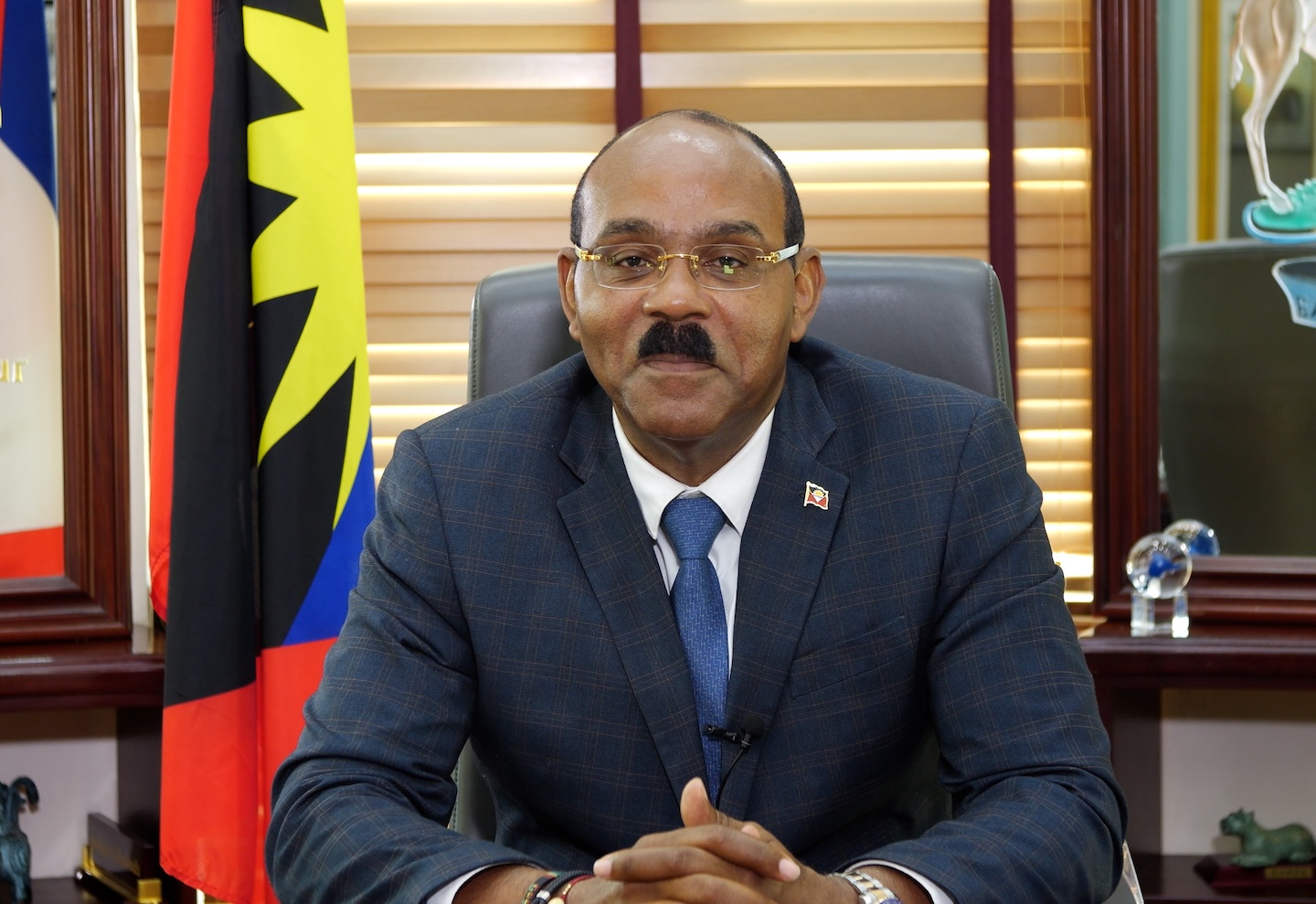
Prime Minister of Antigua and Barbuda responds to the Joint Statement by the Caribbean Heads of Judiciary
13 August 2026
The Prime Minister of Antigua and Barbuda, The Right Honourable Gaston Browne, has responded to a public statement issued on 12 August by the Caribbean Heads of Judiciary. The Prime Minister’s response speaks for itself. It is published in full below:
“I have taken careful note of the Joint Statement issued on 12 August 2026, by the Caribbean Heads of Judiciary. I respect the constitutional office held by each signatory and I reaffirm, without qualification, the importance of an independent and impartial judiciary.
Judicial independence is essential to democratic government. However, it does not place judicial decisions or the administration of justice beyond reasoned public criticism. Nor does it require an elected Government to remain silent when sentencing outcomes raise serious and recurring questions about public safety, legislative policy and public confidence.
My remarks of 10 August were made in the context of grave concern, expressed by law enforcement and the people of Antigua and Barbuda in general, about firearm violence and statutory rape, in what they regard as unduly lenient sentences in some serious cases.
As Prime Minister, I have a solemn duty to safeguard the welfare of the people of Antigua and Barbuda.
My remarks did not direct the outcome of any case, seek to reopen a decided case or invite anyone to disregard an order of the court.
The Heads of Judiciary have treated my language as though it represented executive instructions against a judge.
It did not.
It was a last resort warning to bring attention to the judicial hierarchy, that if they fail to address the indiscretion and deliberate disregard of their members for the legislation on serious firearms crimes, which provides for up to 15 years custodial sentencing; then our government may be forced to used other remedies to protect the citizenry.
To remove all doubt, there has never been any request or action by my government to remove, or reassign or deport any member of the judiciary.
Questions concerning the tenure, assignment or conduct of a judicial officer are governed by the Constitution and the law, and those arrangements will be respected.
That clarification neither withdraws nor dilutes my criticism of sentencing outcomes and institutional performance; it makes clear that my criticism is not directed at the constitutional security or personal independence of any judge.
Further, I do not accept that forceful criticism of sentencing practice is, by itself, an attack on judicial independence.
My Government has recently received a renewed and substantial parliamentary mandate, having included in the manifesto placed before the electorate, a pledge to tackle firmly gun crimes, violence against women and sexual offences against children.
That mandate does not place the Executive above the law. However, it imposes a duty to protect the people, to uphold public order and to speak plainly when the public interest requires it.
Similarly, Judicial independence carries a responsibility for openness, consistency, competence and continuous institutional improvement.
The Joint Statement says that an appeal is the only lawful and legitimate way to address an unduly lenient sentence.
That is not accurate.
An appeal is a proper means of challenging or correcting the sentence in an individual case.
However, it is not the only lawful means by which a democratic society may examine systemic failure in the dispensation of justice.
Antigua and Barbuda has provided a right of appeal by the Director of Public Prosecutions against sentence since the Criminal Procedure (Amendment) Act 2004, and that power has been successfully exercised.
Whether to appeal is a matter for the constitutionally independent Director of Public Prosecutions.
It should be acknowledged that an appeal in one case, cannot by itself answer broader questions about sentencing patterns, the application of statutory penalties and sentencing guidelines, repeat offending, criminal justice, inordinate delays, rehabilitation or coordination among police, prosecutors, courts and correctional services.
Parliament may legislate, the Executive may propose policy and provide resources, and the Judiciary may interpret and apply the law.
Reasoned public criticism and structured engagement among these institutions are also entirely consistent with the separation of powers.
This is not an intellectual or theoretical debate.
We are facing a serious problem. Crime and violence was deemed as a public health crisis by CARICOM heads. If not addressed urgently and concurrently by coordinated efforts, involving all branches of government, our region could descend into uncontrolled criminality, thereby undermining development.
Firearm violence threatens the right of our people to live in peace and without fear.
It harms victims and families, burdens law-enforcement agencies, weakens confidence in public institutions and places at risk the secure social and economic environment on which investment, employment and tourism depend.
Those consequences require urgency from every arm of the State.
Sentencing must take account of the governing statute, applicable guidelines and appellate decisions, guilty pleas, aggravating and mitigating factors, antecedents, time spent on remand and the totality principle.
The answer is to examine the evidence rigorously, not to dismiss the concern before it is examined.
For that reason, yesterday – 12 August 2026 – I wrote to the Honourable Chief Justice of the Eastern Caribbean Supreme Court, Her Ladyship Margaret Price Findlay, proposing the immediate establishment of an independent committee to review sentencing for firearm and other serious violent offences, repeat offending and the operation of the wider criminal justice system in Antigua and Barbuda.
The review would analyse a defined body of sentencing data, identify any material divergence between legislative policy and sentencing outcomes, examine the causes, and recommend practical reforms.
I have suggested that the Honourable Mr Justice Adrian Saunders, former President of the Caribbean Court of Justice, be invited to chair the committee, subject to his willingness. I have also consulted the Right Honourable Sir Dennis Byron and the Honourable Mr Justice Godfrey Smith SC, the CARICOM High-Level Representative on Law and Criminal Justice.
They are both prepared to assist the committee, including by making available the considerable body of work already undertaken by Justice Smith and others.
This is a firm, constitutional and evidence-led response to a matter of urgent public importance.
If the Heads of Judiciary support constructive and collaborative engagement, I invite them to support this initiative and to help ensure that it proceeds without delay.
Judicial independence and institutional accountability are not opposing principles.
Our Government seeks no control over the decision of any court.
It does seek a criminal justice system that is lawful, proportionate, transparent, consistent and effective in protecting the public.
Finally, I remind you that pervasive lenient sentences without extenuating circumstances, serve no useful purpose but to undermine public safety and confidence in the judiciary.
The people of Antigua and Barbuda are entitled to both an independent judiciary and a justice system that responds proactively and credibly to serious violent crime.
My Government will continue to work for both”.
– Ends –












UNDER-15 FOOTBALLERS EN ROUTE TO AZERBAIJAN FOR WORLD CUP FESTIVAL

ANTIGUA LIONS DEFEAT BEDFORD CRICKETERS IN TOUR OPENER

‘MOST OF THE PROPERTIES ARE SOLD OUT’ – CHOGM PROVIDES MAJOR TOURISM BOOST

TOURISM MINISTRY CONTINUES TALKS WITH JET BLUE

OECS YOUTH PARLIAMENTARIANS DISCUSS ECONOMIC DIVERSIFICATION

GAMBLING AND DRUG-RUNNING AMONG PROHIBITED PRACTICES AT PELICAN COURT – PM BROWNE

SHAI HOPE AND KEEMO PAUL INSPIRE WEST INDIES TO SERIES-LEVELLING VICTORY

A&B TO STAND WITH CHINA ‘EVEN IF IT COMES WITH CONSEQUENCES’ – PM BROWNE

MAJOR SEEDLING DISTRIBUTION ANNOUNCED IN FOOD SECURITY THRUST

IMF POINTS TO POTENTIAL REVENUE FALLOUT FROM THREAT TO CIP

ABS EVENING NEWS (LOCAL SEGMENT & WEATHER REPORT) 19.1.2024
ABS EVENING NEWS (LOCAL SEGMENT & WEATHER REPORT) 18.1.2024
ABS EVENING NEWS (LOCAL SEGMENT & WEATHER REPORT) 16.1.2024
ABS EVENING NEWS (LOCAL SEGMENT & WEATHER REPORT) 14.1.2024